
Witches and Women of the 20th Century
The “girlbossification” of witchcraft in the 20th century mirrors the struggles of the modern feminist movement. Witches have been featured in pop culture in many ways: The Crucible, The Lion, The Witch and The Wardrobe, Harry Potter, Sabrina The Teenage Witch. Witchcraft has existed across the globe for centuries, and with time our societies’ views of the occult have shifted drastically. Magic and witchcraft have been used to represent complex concepts: the rise of McCarthyism in the 1950’s; a biblical evil, the devil herself; a representation of power, imagination, bravery; a lens through witch to view the uniquely complicated life of a teenage girl.
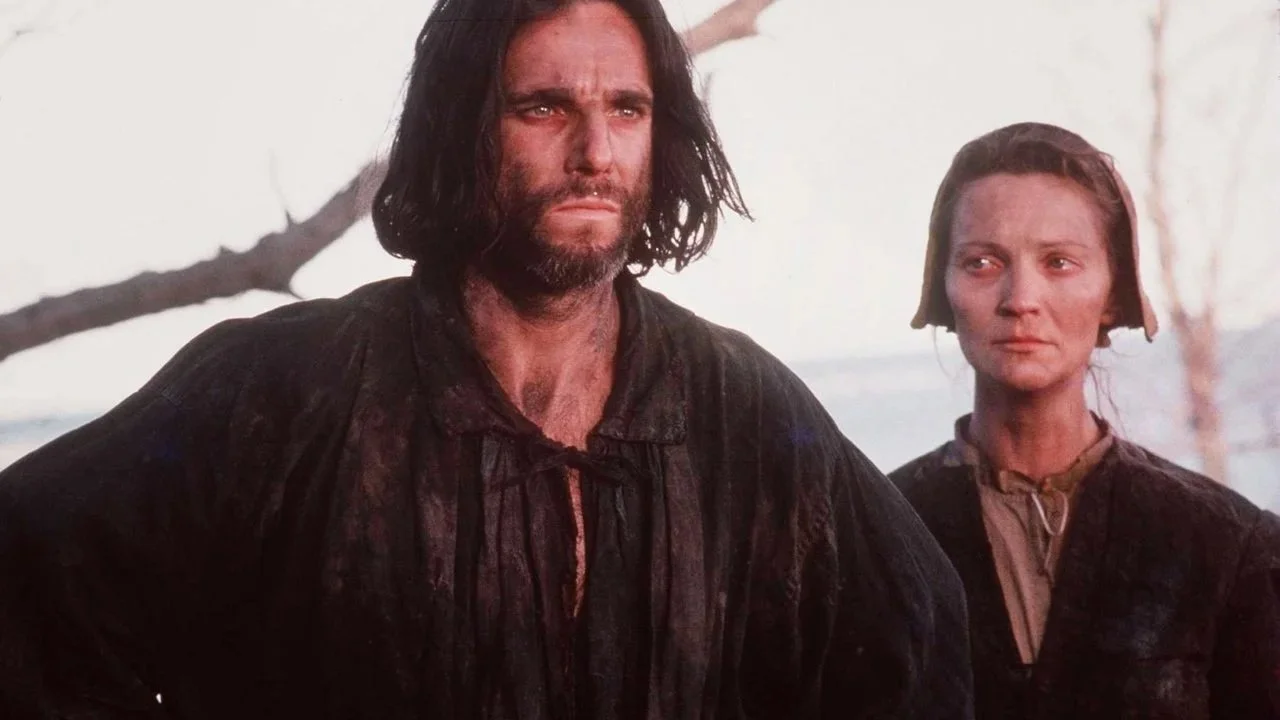
John and Elizebeth Proctor
Arthur Miller’s 1953 play, The Crucible reshaped our modern perception of witches. Miller uses a fictionalized retelling of real events to represent the “witch hunt” against communists in the early 1950s. In the United States after World War 2, the consequences of being accused of communism ranged from social exile to imprisonment.
Miller notes before the first act, “This play is not history in the sense in which the word is used by the academic historian” (2). Miller understandably took creative liberties in his retelling of the Salem witch trials in order to share a political message, however, this message comes at the expense of women.
Miller tells the story of Abigail Williams, a vengeful, manipulative, promiscuous young woman weaponizing her town’s religious hysteria. Abigail Williams seduces the respectable protagonist, John Proctor, while working as a maid in his home. His wife, Elizabeth Proctor fires Abigail, inciting her jealous frenzy. Abigail falsely accuses Goody Proctor of using a poppet to stab her with a needle, amidst the hysteria of the time this was evidence enough to have her jailed for witchcraft. Abigail was convinced John Proctor was in love with her and determined to have him to herself. Proctor, desperate to save Elizebeth, admits to his adultery in an attempt to discredit Abigail’s accusations against his wife. Elizabeth denies this in an attempt to protect her husband. After a series of accusations, lies, and deflections, John Proctor is accused of witchcraft, he refuses to sign a public repentance, ultimately hanged with his integrity.
Miller was clearly inspired by religious themes as this archetype is prevalent in the Bible. Abigail represents a textbook biblical femme fatale, an Eve, Jezebel, or Delilah, the downfall of a man and the very origin of all sin. Proctor is a lamb to slaughter, a martyr, an innocent man sacrificed like Christ himself. John Proctor is killed having been falsely accused of witchcraft whereas Abigail drinks blood while dancing naked in the woods in an attempt to hex Goody Proctor. Witchcraft is condemned as the practice of a jealous mistress cursing the wife of a pious man whom she has deceived.
Looking at Romans 5:8-12 “ But God demonstrates his own love for us in this: While we were still sinners, Christ died for us...Therefore, just as sin entered the world through [Eve], and death through sin, and in this way death came to all people, because all sinned—”. Religious imagery is a powerful tool for connecting with readers in a way that’s familiar and emotional. Jane Bell said it best, it’s crazy how the very first sin was a woman who ate.
In Gretchen A. Adams’ The Specter of Salem: Remembering the Witch Trials in Nineteenth-Century America, she illuminates how the Salem witch trials have been a “common symbolic place of reference for American’s”(3). Miller certainly wasn’t the first to use the trials as a modern political allegory. However, his depiction of the Salem witch trials, meant to critique the red scare, is clearly influenced by the gender roles and misogyny of the 1950s.
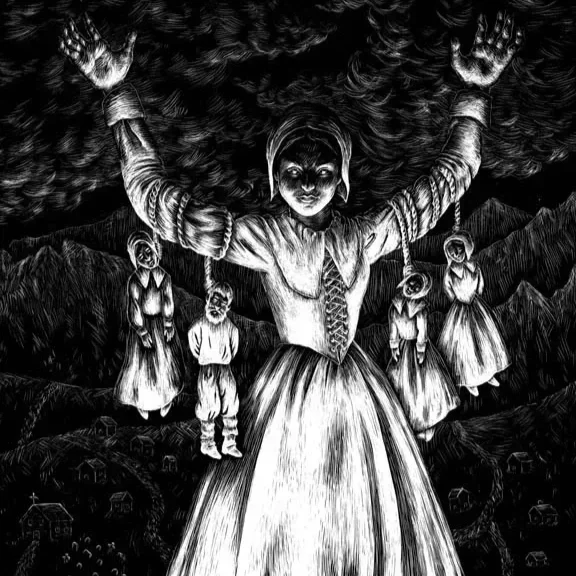
Artistic depiction of Abigail Williams
The Crucible's portrayal of young women as vengeful, promiscuous, hysterical, manipulative liars is undeniably harmful to feminism especially considering the political context of the era it was written in. When revisiting The Crucible through a feminist lens we can see direct ties between Miller’s portrayal of witches in 1693 and the treatment of women in 1953.
Nuclear families (white, wealthy ones of course) were settling into the suburbs off of a post-war-economic-boom. Powered by capitalism, tranquilized by quaaludes, the American people were assimilating to an idyllic world of traditional gender roles, 2.5 kids, and jello molds.
Betty Friedan, author of 1963’s The Feminine Mystique further discusses post-war views of women’s roles and feminism,“In the fifteen years after World War II, this mystique of feminine fulfillment became the, cherished and self-perpetuating core of contemporary American culture. Millions of women lived their lives in the image of those pretty pictures of the American suburban housewife, kissing their husbands goodbye in front of the picture window, depositing their stationwagonsful of children at school, and smiling as they ran the new electric waxer over the spotless kitchen floor.” (18).
Friedan paints the picture of the perfect American housewife, this very idea is what comes to mind for many when they imagine a woman in the 1960. However, this idealized housewife fails to capture the reality for women of the era.
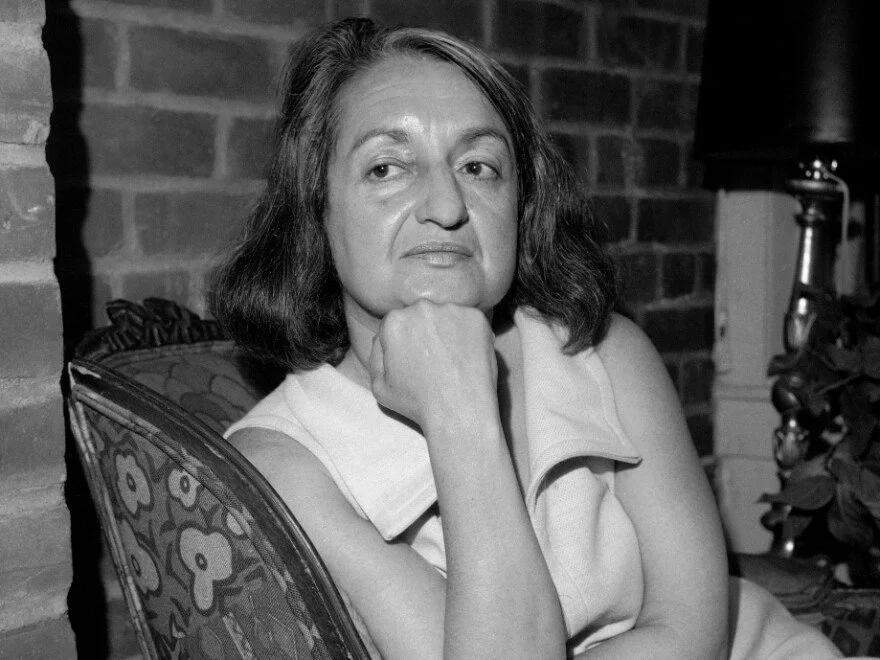
Friedan interviews a young mother who claims “I've tried everything women are supposed to do-hobbies, gardening, pickling, canning, being very social with my neighbors, joining committees, running PTA teas. I can do it all, and I like it, but it doesn't leave you anything to think about-any feeling of who you are. I never had any career ambitions. All I wanted was to get married and have four children. I love the kids and Bob and my home. There's no problem you can even put a name to. But I'm desperate. I begin to feel I have no personality. I'm a server of food and a putter-on of pants and a bedmaker, somebody who can be called on when you want something. But who am I?”(21).
Freidan’s writing was vital to the success of second wave feminism, she revealed the truth behind the false narrative women had been fed about what they should want to be. Into the 1970s the feminist movement transformed, and with it so did witches.
In the 1970’s Wicca was becoming popular among feminists in England. Wiccan Movement of the 1970s by Larry Smolucha defines wicca as a “nature-based mystery religion emphasizing spiritual exploration and fulfillment, environmental stewardship (with animistic overtones), and attainment of individual harmony with intrapersonal and transcendental forces”. This introduces the idea of witchcraft to popular culture. In a 1970’s CBS news broadcast Gary Sheppard forbodes against the rise of witchcraft on the streets of New York stating “Here on Broadway the musical Hair has even hired a staff astrologer to select the best day for the opening and to design the show’s trademark”. The broadcast proceeds to dramatically cut between various psychic shops, astrology pamphlets, and tarot booths, (oh my!).
The early 1980’s marked a new era for Americans. Big hair, Jazzercise, rampant unemployment, hairspray-induced ozone erosion, raging Christian nationalism, constant fear of mutually assured society nuclear destruction, and worst of all Ronald Reagan. Welfare was being cut and the middle class was struggling, this pushed many women back into the workplace.
Following a decade of wiccan revival and legal successes of second wave feminism, the 1980’s introduced an era of satanic panic. Widespread fear of witchcraft and satanism, similar to the Salem witch trials or 1950’s Mcarthyism. Political and religious propaganda fueled hate campaigns against anything deemed “demonic”. White Christian nationalists organized an attack on women’s rights following Roe V. Wade and other landmark steps towards women’s rights.
By the late 1990’s magic and Witchcraft were being marketed as aspirational to society’s most influential demographic, teen girls. No longer green and covered in warts, witches of the 90’s had long silky blow outs, leather jackets, floral maxi skirts and combat boots. Ancient practices such as sage smudging, astrology, and tarot were officially mainstream. Miss Cleo would read your fortune on live TV for $4.99 a minute and horoscopes were featured in the back of any newspaper.
1996’s The Craft uses witchcraft to explore feminism, class, race, and power. The movie opens with Nancy, Rochelle, and Bonnie. High school girls practicing witchcraft in their own coven, searching for their fourth member. After they meet Sarah, the new girl in town with a unique set of mystical abilities. The story follows the girls as they navigate Catholic school, dating, bullies, and supernatural gifts bestowed upon them by Manon an ancient and all-powerful deity. Rachel True who plays Rochelle, stated in a Huffington Post article for the 20th reunion “When we did the read-through, I had a scene with my upper-middle-class, stodgy parents. We shot it, but it ended up being cut from the film, which I was a little bummed about because I was like, “Wait, all the other girls get parents. I dont get parents?” And this was 20 years ago so then I said, “Listen, you’re black and you’re in the movie. That’s pretty good already.” From the 90’s onward feminism was becoming popular and more importantly, marketable. Big brands catered towards wealthy, white, feminists in the modern era of the “girlboss”.
In 2025, the commodification of witchcraft has been exemplified. Closed practice spiritual traditions are being co-opted by TikTok live etsy witches who will shrink your ex-boyfriend’s penis for $30. Astrology, created 4000 years ago by ancient Mesopotamians to predict the future with the stars, now used as a compatibility indicator in Tinder bios. Our perception of witchcraft has shifted drastically over the centuries and continues to evolve over time. Examining these patterns reveals how societies treatment of witches mirrors complex attitudes towards feminism, women’s roles, and how certain women are excluded from feminist narratives.
